Back to School with SanDisk and Pokémon
September, 2026
Sandisk came to us with two new products from its Pokémon collection: the Mew Edition USB-C flash drive and the Mewtwo Edition portable SSD. Our assignment was to build a story around them that felt playful, cinematic, and true to the world people already love.
The fun part was obvious. The challenge was making sure the products never got lost in it.
Pokémon brings decades of character, nostalgia, and visual language into the room before you have filmed a single frame. We wanted to use that energy without trying to recreate the Pokémon universe too literally. The film still needed to feel like SanDisk, and the drives needed to be more than props. They had to help move the story forward.
The Best Kind of Location Scout
This was our first shoot at Oakland Hills Campus, a former school that now serves as a production location.
Some scouts are mostly practical. This one quickly became more imaginative. As we walked through the campus, we kept stopping to try angles and picture what each space could become. The hallways, classrooms, and corners of the old school already carried a little mystery. It felt familiar, but also easy to push into something more colorful and unexpected.
That gave us a strong starting point. We did not have to force a world onto the location. We could build from what was already there, then use production design, lighting, lenses, and movement to change how it felt on camera. By the end of the scout, it was easy to imagine Mew and Mewtwo finding their way through the space.
Two Products, Two Personalities
This was our first shoot at Oakland Hills Campus, a former school that now serves as a production location.
Some scouts are mostly practical. This one quickly became more imaginative. As we walked through the campus, we kept stopping to try angles and picture what each space could become. The hallways, classrooms, and corners of the old school already carried a little mystery. It felt familiar, but also easy to push into something more colorful and unexpected.
That gave us a strong starting point. We did not have to force a world onto the location. We could build from what was already there, then use production design, lighting, lenses, and movement to change how it felt on camera. By the end of the scout, it was easy to imagine Mew and Mewtwo finding their way through the space.
Making Technical Superiority Easy to Understand
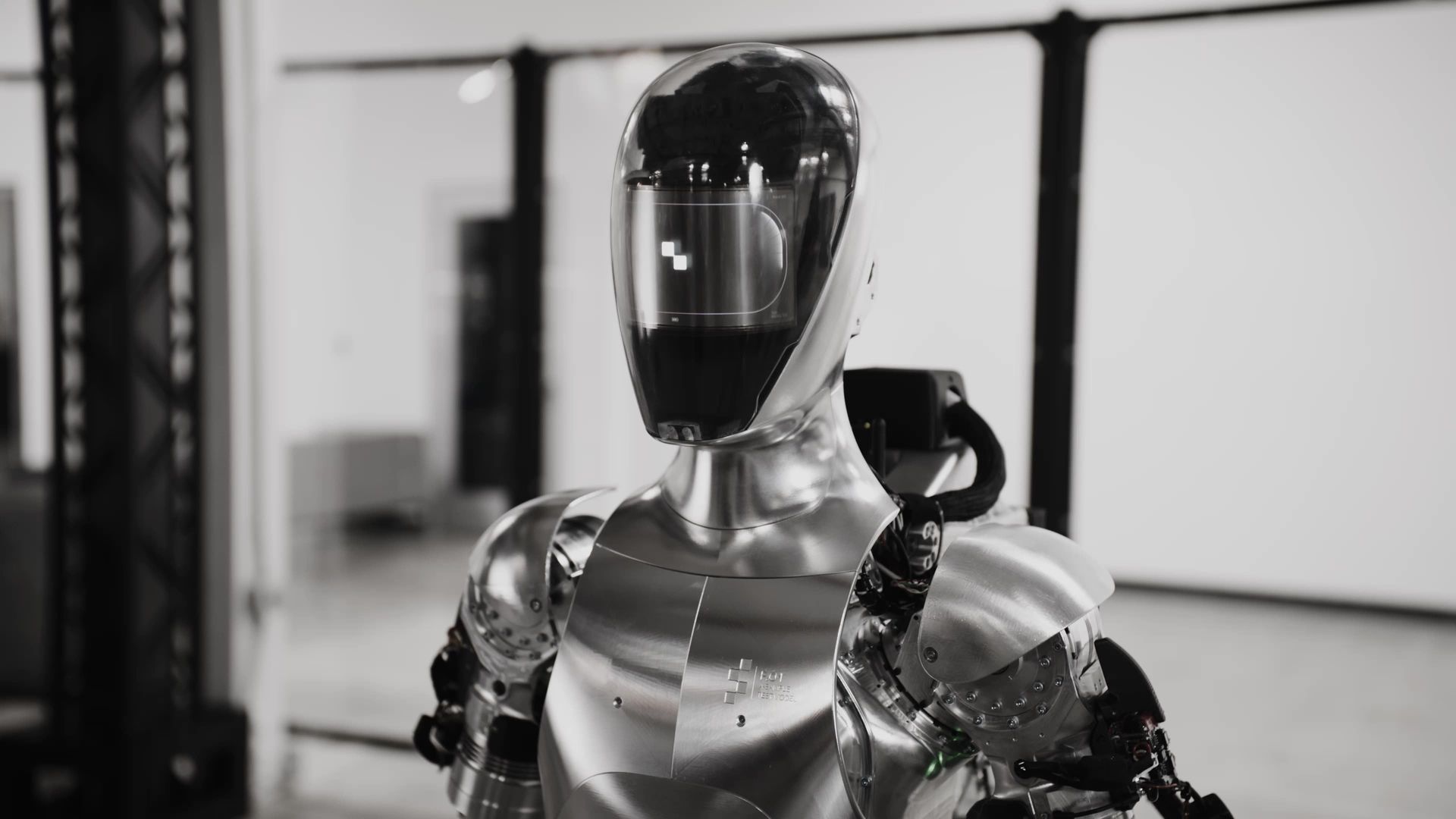
Matic needed to stand apart in a well-established category. The film had to communicate advanced computer vision, on-device intelligence, and autonomous navigation to viewers with different levels of technical fluency. The challenge was to preserve its technical credibility without overwhelming the story.
Show the Decision
To showcase the intelligence, some sequence had to work on two levels. An obstacle in Matic’s path is easy to understand. The perception view beside it reveals what the robot sees and how it decides where to move in real time. Together, the two views turn sophisticated navigation into something immediately legible.
Make the Invisible Visible
Some of Matic’s intelligence cannot be seen through product movement alone. Subtle overlays helped visualize sensing and decision-making without interrupting the film’s calm visual language. They gave viewers enough context to understand the technology while keeping Matic, rather than the graphics, at the center.
Show the Engineering Behind it
Some technical details deserved to be seen directly. A focused shot of the NVIDIA chip and other internal components gave Matic’s on-device intelligence a tangible anchor. It signaled the level of computing inside the robot without turning the film into a component-by-component walkthrough.
Built for Every Channel
From the beginning, we planned beyond the hero film. Shots were framed to work across
Matic’s website, social channels, and campaign materials, with room for copy, flexible crops, and moments that could stand on their own. The result was a broader asset library from the same two-day production.
A Crew That Ran With It
Our Director, Laura D'Antoni, brought the right sense of play to the story. She kept the film moving and found ways to make the product moments feel part of the adventure rather than pauses for advertising.
Our DP, Erick Turcios, gave the visuals their rich color and energy. Melda, our art director, transformed the familiar school setting into a world with its own personality. Each department added another layer, but everything still felt connected.
That is one of our favorite parts of a shoot like this. At the scout, you can see the outline of an idea. Then the crew arrives and starts making it real. A hallway changes once it is lit. A familiar room becomes strange from the right angle. A tiny drive fills the frame through a probe lens. Everyone brings something that pushes the original idea a little further.
This project had plenty of those moments.
If you are the kind of person who pauses a behind-the-scenes frame to figure out what we were shooting with, this part is for you.
Cameras and lenses
- ARRI ALEXA Mini LF
- RED KOMODO
- Nikon ZR
- ZEISS Supreme Prime lenses: 35mm, 50mm, 85mm, and 100mm
- Angénieux zoom lenses
- Laowa 10mm RF
- Laowa 24mm Probe EF
- Sigma 18–35mm EF
We’ve been spending more time lately partnering with brands on unique projects across Robotics, AI, Defense, Autonomous Technology, SaaS, Advanced Manufacturing, and more. If you’re working on something interesting, we should meet. hello@thinkfoundry.com
Our Video Production Work
We’ve worked at tech companies ourselves, so we know what tech companies need. We understand manufacturing, engineering, robotics, and more because we’ve experienced it. Learn more about us and see what we’ve accomplished.